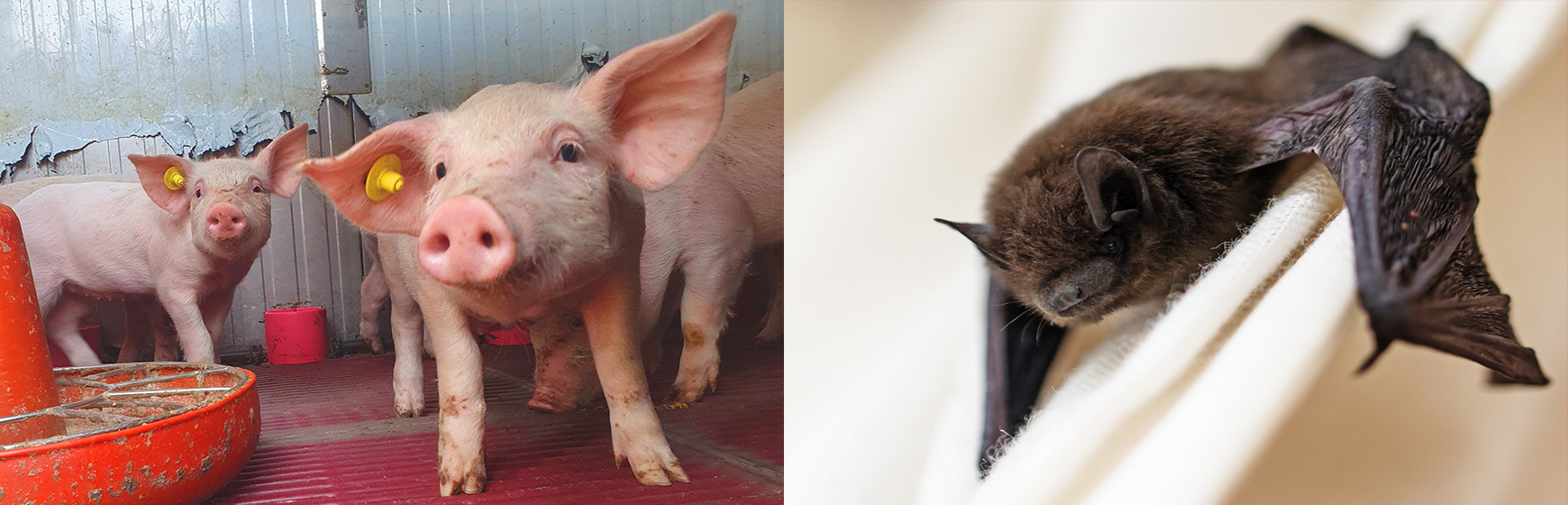
A study by IZSVe has shown that at least eight species of bat (Chiroptera) make use of the areas around pig farms in northern Italy. Although this interaction may yield benefits for both species, the lack of physical barriers and gaps in biosecurity at pig farms could pose a residual risk of interspecific transmission of viruses.
Bats or Chiroptera, are recognized as being natural reservoirs for various coronaviruses (CoV), some of which may have given rise to viral species that are harmful to humans and livestock, such as SARS-CoV-2 or porcine epidemic diarrhoea virus in pigs. However, the dynamics and mechanisms behind viral spillover into livestock or humans remain largely unknown.
Researchers from the Laboratory for Emerging Viral Zoonoses of Istituto Zooprofilattico Sperimentale delle Venezie (IZSVe) carried out a study, published in the prestigious journal Plos One, to assess risk factors for virus transmission from bats to pigs, using the coronaviruses identified in selected farms in northern Italy as a case study. The study was conducted within the framework of the Euroean project ConVErgence in partnership with La Sapienza University of Rome, the University of Padua, the University of Bari, the University of Sussex (UK), and Coop. STERNA of Forlì.
“The interface between wildlife, livestock and humans constitutes a highly permeable boundary at which infectious diseases with epidemic potential can emerge,” explains Stefania Leopardi, senior veterinarian and research coordinator. “We know that pig farms can serve as potential ‘hot spots’ for the spread and emergence of dangerous recombinant variants that may threaten both animal and human health. Accordingly, identifying new coronaviruses is key to assessing their capacity to adapt to pigs and humans, but it is equally important to understand the risk factors that could facilitate spillover episodes across animal species”.
Ecological investigations, environmental modelling, virological analysis
The study adopted a multidisciplinary approach inspired by the ‘One Health’ paradigm, combining ecological investigations, environmental modelling and molecular virology. The first stage involved bioacoustic monitoring in 14 pig farms in the Triveneto region of Italy, used to identify eight species of bat in the farms. The most prevalent and active proved to be P. kuhlii, P. pipistrellus and H. savii.
Landscape analysis and farm-level variables led to the identification of factors most strongly influencing bat activity. Findings showed that farms with features known to attract insects showed intense bat activity, while the surrounding habitat affected biodiversity to a lesser extent.
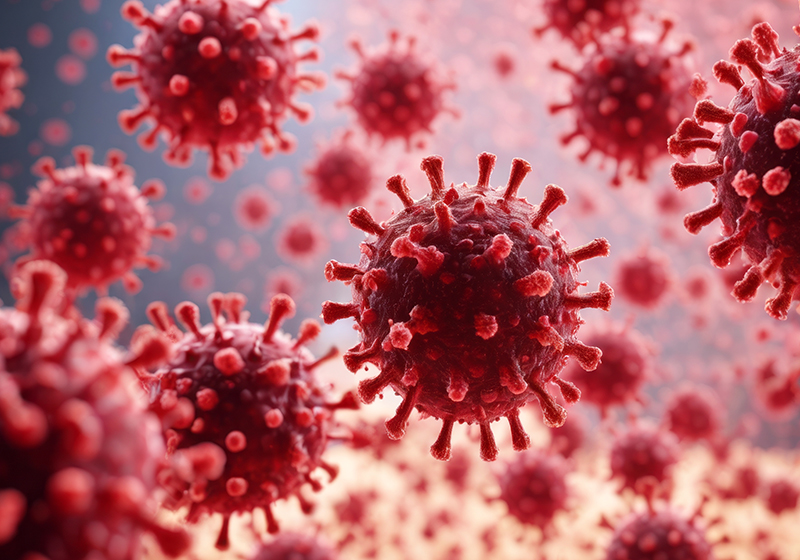
IZSVe researchers conducted a study to evaluate risk factors for coronavirus (CoV) transmission from bats to pigs. Bioacoustic monitoring in 14 pig farms in the Triveneto region identified eight bat species on the farms, with P. kuhlii, P. pipistrellus, and H. savii being the most widespread and active. Virological investigations identified three new CoV species, detected in P. kuhlii and H. savii. A key aspect highlighted by the study is the frequent absence of physical barriers on farms to prevent contact between bats and pigs, and the need to strengthen biosecurity measures.
In parallel, virological investigations enabled the researchers to identify three novel species of CoV, detected in P. kuhlii and H. savii, for which whole genome sequences were obtained. Pivotal to this phase was the combined analysis of samples collected from three colonies of P kuhlii and archival samples obtained from rabies surveillance activities in wildlife populations, conducted over the years by the Laboratory.
Among the most common bat species, active CoV circulation was observed in P. kuhlii, including in colonies located within the pig farms, with two distinct species of CoV identified in these bats. The CoVs were detected during the bat activity season, peaking in May and August. In some cases they seemed to be shared between different bat species (P. kuhlii and H. savii), further heightening the potential risk of genetic recombination.
Phylogenetic analyses also showed that the pigs could be exposed to at least eight distinct species of CoV, since the CoVs were specifically associated with their host.
On the one hand, the study highlighted that pig farms can act as bat conservation oases in rural landscapes dominated by intensive agriculture, where the monotony of environmental features is depleting biodiversity. In these settings, bats can deliver an important ecosystem service by controlling harmful insect populations, which can in turn reduce the need for pesticides. That said, bat circulation is also associated with a potential risk of exposing humans and livestock to the viruses they may carry.
A key finding of the study was that many farms lacked physical barriers intended to prevent contact between bats and pig enclosures, and that biosecurity practices were inconsistently applied. Reinforcing these measures could mitigate the risk of exposure to various CoVs and, more in general, to viruses associated with wildlife, ultimately contributing to improvement in the coexistence of humans with wildlife and livestock.
Read the scientific paper in Plos One »
![Blue crabs: a threat or a resource? [Video]](https://www.izsvenezie.com/wp-content/uploads/2026/05/blue-crabs-threat-or-resource-video-500x383.jpg)