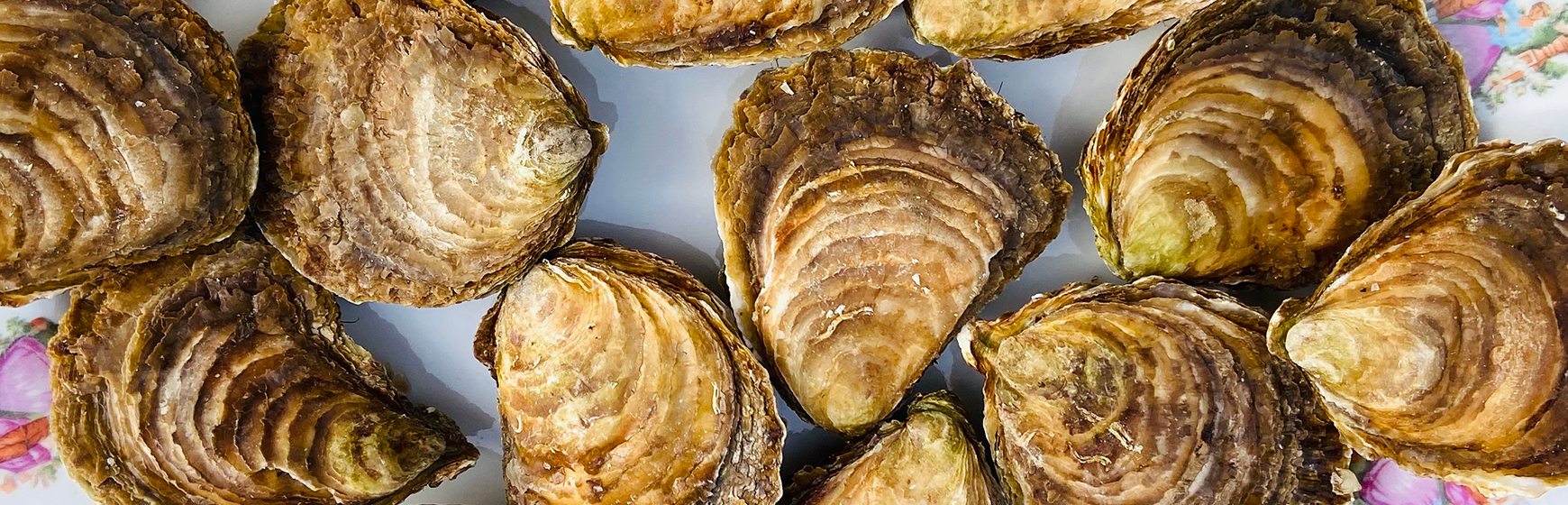
The MARINET project, a study by IZSVe researchers on health, nutrition, and biosecurity in oyster farming. Guidelines for the sector, currently under preparation, will be available soon.

Promoting the farming of the European flat oyster (Ostrea edulis) is one of the objectives of the European Interreg Italy–Croatia MARINET project, dedicated to the development of technologies and operational models to make aquaculture in the Adriatic more sustainable, safe, and competitive. This project involves cooperation between research institutions, universities, veterinary institutes, and fisheries companies in Italy and Croatia.
Promoting the farming of the European flat oyster (Ostrea edulis) is one of the objectives of the European Interreg Italy–Croatia MARINET project, dedicated to the development of technologies and operational models to make aquaculture in the Adriatic more sustainable, safe, and competitive. This project involves cooperation between research institutions, universities, veterinary institutes, and fisheries companies in Italy and Croatia.
Innovative harvesting and farming systems
A key aspect of the project is testing innovative flat oyster harvesting and farming systems, which facilitate the capture and supply of juveniles, allowing oysters to reach commercial size with fewer resources and man-power.
Within WP2, coordinated by the Istituto Zooprofilattico Sperimentale delle Venezie (IZSVe), experimental activities were developed to evaluate the integration of European flat oyster farming with existing mariculture facilities (sea bass and sea bream), with a particular focus on animal health, biosecurity, and environmental sustainability.
The activities include monitoring oysters during the various farming phases, sampling at pilot sites, and laboratory analyses to assess the health status of the animals and the possible presence of pathogens of concern to Adriatic shellfish farming.
Studying the oyster health status

The activities lead by the IZSVe within the MARINET project include the study of the main pathogenic protozoa of flat oysters, such as Bonamia ostreae, Bonamia exitiosa, and Marteilia refringens, as well as other emerging infectious agents and epibiotic organisms capable of affecting the growth and well-being of farmed animals
The acquisition of new knowledge on the health status of flat oysters contributes to improving management practices and disease prevention strategies.
One example of this is the study of the main pathogenic protozoa of flat oysters, such as Bonamia ostreae, Bonamia exitiosa, and Marteilia refringens, as well as other emerging infectious agents and epibiotic organisms capable of affecting the growth and well-being of farmed animals. The data collected so far provide the scientific basis for the development of innovative management strategies aimed at production diversification and mitigating health risks.
With the contribution of the National Reference Centre for the Study and Diagnosis of Fish, Crustaceans and Molluscs Pathology, IZSVe has provided advanced diagnostic methods, biomolecular, histopathological, and microbiological analyses. Furthermore, scientific coordination activities have been instrumental in the development of integrated aquaculture models, potentially replicable throughout the Adriatic basin.
Farming Guidelines

The data collected provide the scientific basis for the development of innovative management strategies and integrated aquaculture models, aimed at production diversification and mitigating health risks. One of the main outputs of the project is the Guidelines for Flat Oyster Cultivation, a document currently being developed by the IZSVe team involving also small and medium-sized enterprises in the sector.
One of the main outputs of WP2 and the entire project is the Guidelines for Flat Oyster Cultivation. The document, currently being developed by the IZSVe team, envisages the direct involvement of small and medium-sized enterprises in the sector, which play a key role in linking the scientific and production sectors.
The Guidelines aim to define reference protocols for flat oyster farming in the Adriatic, contributing to the revitalization of production practices in Italy and the improvement of those adopted in Croatia. In this way, the project supports the construction of a more efficient, resilient, and sustainable oyster supply chain at the cross-border level.
The results of the MARINET project, scheduled for completion in early 2027, will serve to strengthen the environmental and economic sustainability of Adriatic mariculture. The project will promote production diversification, improve farm biosecurity, and promote the European flat oyster as a strategic resource for the future of the aquaculture sector.
![Blue crabs: a threat or a resource? [Video]](https://www.izsvenezie.com/wp-content/uploads/2026/05/blue-crabs-threat-or-resource-video-500x383.jpg)

![What are zoonoses? [Video]](https://www.izsvenezie.com/wp-content/uploads/2026/05/what-are-zoonoses-video-500x383.png)